Table of Contents
Hair loss looks about the same in the mirror no matter what is causing it. Same wider part, same thinner ponytail, same handful of hair in the shower drain. What is happening underneath is not the same at all, and that difference decides what your hair loss treatment should look like.
At Vertex Aesthetics in Toronto, we identify the cause before recommending anything. Postpartum shedding and age-related hair thinning respond to different plans on different timelines, and mistaking one for the other is why people spend a year on products that were never going to help.
How do I know if my hair is falling out from having a baby or from getting older?
Timing and pattern are the clearest signals. Postpartum shedding usually starts two to four months after delivery and comes from across the whole scalp in handfuls, and because the follicles are healthy, most patients see it slow over several months. Age-related thinning builds gradually over years in a pattern, widening the part line and returning hair that is finer with each cycle. A scalp assessment can confirm which one is happening.
How to Tell Postpartum Shedding From Age-Related Thinning
Two questions separate them fastest: when did it start, and is your hair falling out or growing back thinner?
- Postpartum shedding begins two to four months after delivery, comes from across the whole scalp rather than one spot, and releases in handfuls at the wash or in the brush while your hairline pattern stays roughly as it was.
- Age-related hair thinning builds gradually over years and follows a pattern. The part line widens, volume drops at the crown or temples, and hair returns shorter and finer each cycle instead of falling out all at once.
Underneath, the two are doing different things. Postpartum shedding is a timing problem in the hair cycle, not follicle failure. Pregnancy holds more hairs in the growing phase, then hormone levels drop and a large group shifts into shedding together. The clinical term is telogen effluvium, and because those follicles are healthy, most patients see shedding slow and density recover over several months. Watching it happen on very little sleep is upsetting even when it is temporary.
Low iron or ferritin, thyroid shifts, sleep deprivation, and restrictive eating can stretch that recovery out. At this point, we encourage you to visit your family doctor or OB for specific blood work to check for deficiencies, especially if postpartum shedding and thinning may be overlapping. We collaborate closely with your doctor so your postpartum hair loss treatment plan is built on the full picture. In more complex cases, we continue working alongside your doctor throughout treatment, since deficiencies that developed over a long period can directly affect your care and results.
Overlap is common, though, and self-diagnosis has limits. Identical symptoms can point to two different processes, which is why a scalp assessment in Toronto starts with measurement instead of guesswork.
What Is Actually Happening in Age-Related Thinning
Age-related hair thinning is progressive, and that is the key difference. Follicles become sensitive to DHT, a hormone byproduct that shortens the growth phase a little more with every cycle, so the hair that regrows is finer and shorter than what it replaced. The clinical term is androgenetic alopecia.
Perimenopause and menopause shift the hormonal balance that had been protecting density, which is why many women first notice it in their forties even though it began earlier.
Miniaturization keeps the process quiet for a long time. There is no dramatic shower moment, just a ponytail that feels thinner than it did three years ago. Because the mechanism keeps running, realistic goals are stabilization and maintenance rather than a one-time correction, and starting earlier leaves more follicles worth supporting.
Why the Cause Changes the Treatment Plan
The two causes call for opposite postures.
- Temporary shedding calls for supporting the scalp environment, correcting deficiencies through your physician, protecting fragile regrowth, and giving the cycle time to finish.
- Progressive thinning calls for early intervention and a consistent long-term program, because every month spent waiting is another month of follicles miniaturizing.
Treating the wrong one is why so many people arrive frustrated after a drawer of serums and vitamins did nothing. The product was often reasonable, it just addressed the wrong mechanism. Aggressive intervention on a cycle that is already recovering adds confusion, not density.
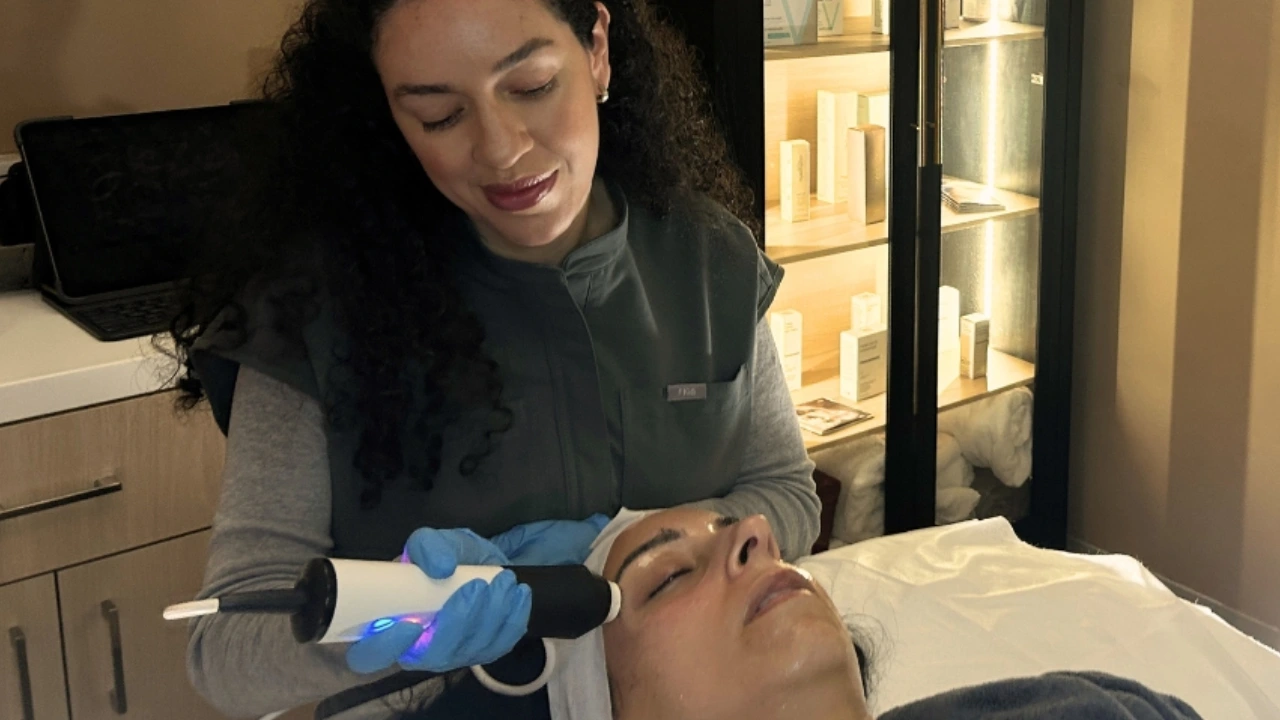
At Vertex Aesthetics, hair restoration in Toronto follows the same order: assessment first, then a plan matched to what the scan and your history show. Depending on the pattern, that can include in-clinic microneedling with growth factors to support follicle activity and scalp circulation, supplements chosen around identified gaps rather than by default, medical-grade home care, and repeat scanning to track whether the plan is working. Results build gradually and vary by cause, follicle viability, and consistency.
When Both Are Happening at the Same Time
Postpartum shedding and genetic thinning can run together, and for many women in their late thirties and forties they do. The shedding can unmask thinning that was already underway, so density does not return all the way to where it was before pregnancy.
If shedding slows on schedule but the part line stays wider or the crown stays sparse past the twelve-month mark, something beyond telogen effluvium is likely contributing. Pattern alone cannot separate two overlapping processes, which is where scalp analysis earns its place.
What a Scalp Assessment Looks At Before Any Treatment Starts
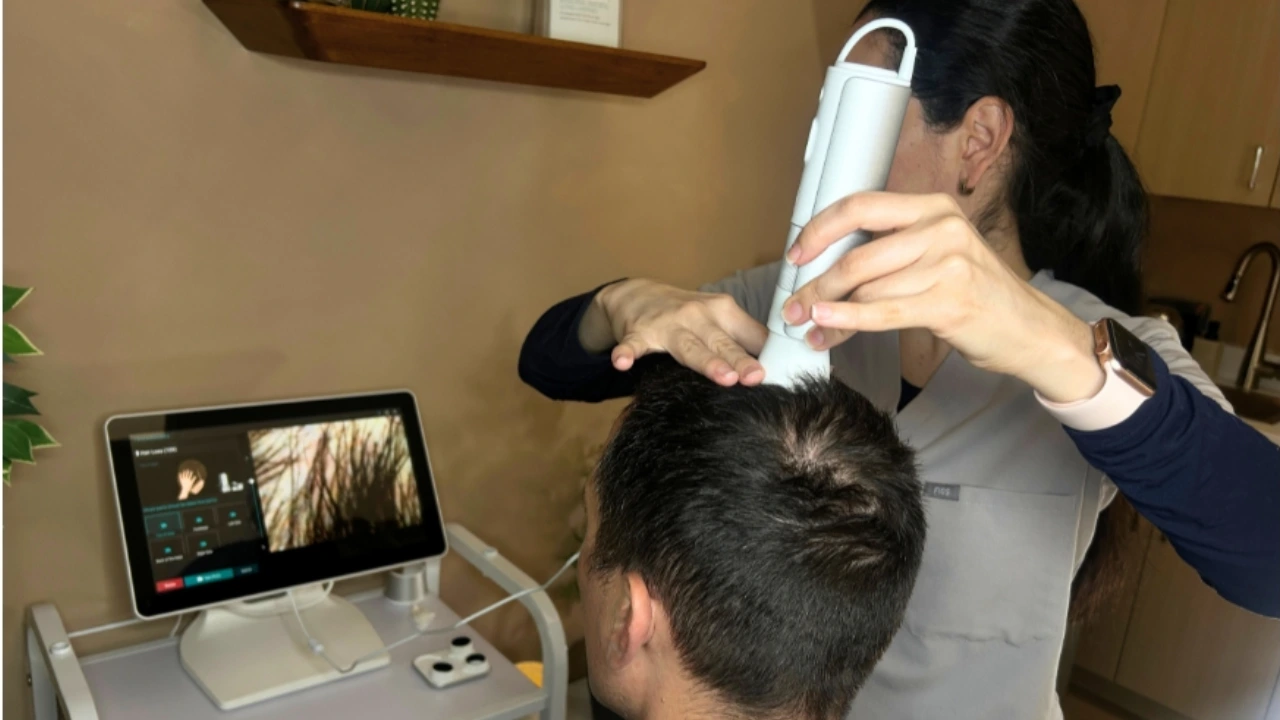
A scalp assessment measures what your eyes cannot. Advanced scanning and imaging evaluate density, active follicle count, miniaturization, and signs of inflammation. That baseline is what later scans get compared against, so progress is measured rather than guessed.
The history review carries as much weight. Come prepared to talk through:
- when the shedding started, and your delivery date
- whether you are breastfeeding
- family pattern of thinning
- medications and supplements you are taking
- recent illness or stress, plus any blood work you can bring
Candidacy is a real outcome of this appointment, not a formality. Not everyone is a candidate for in-clinic hair thinning treatment in Toronto, and some patients are better served by seeing their physician or OB first. We would rather tell you that than start a program that was not going to help.
Not Sure Which One You Are Dealing With? Start There
If you have been staring at your part line trying to decide whether this is temporary or permanent, that question is answerable. Our team at Vertex Aesthetics will scan your scalp, review your history, and tell you what is driving the change and what a realistic plan looks like from here. Book a consultation when you are ready, or start with our online self-assessment if you would rather start there.